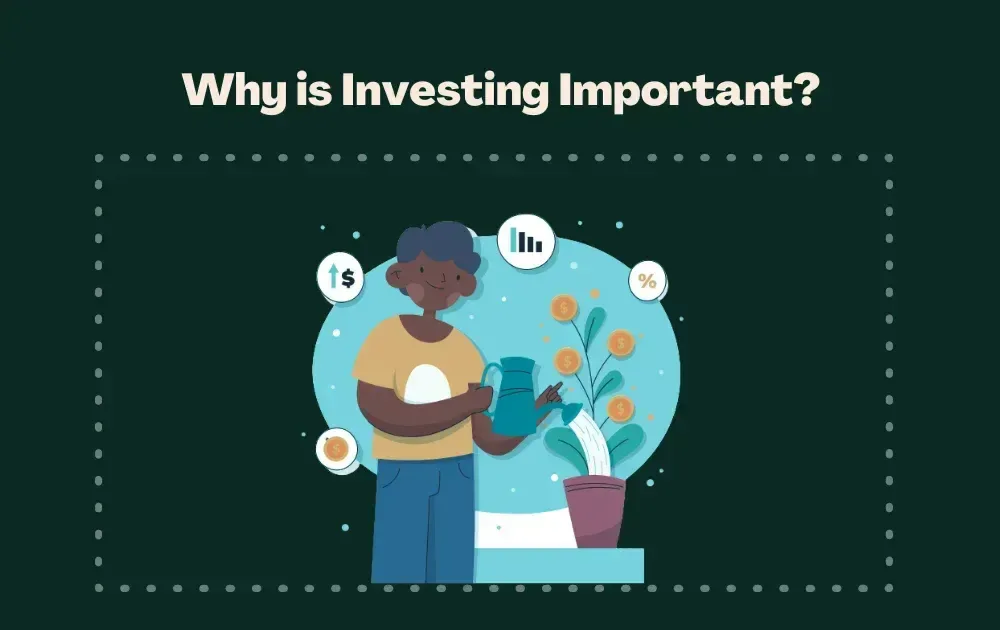
The goal of investing is to get more money from your money. Anything that generates a return is pointed to as an "investment."
This says that any savings account that generates 1% interest is considered an "investment." When most people speak about investing, however, they are relating to higher-return investments such as mutual funds, ETFs, and stocks.
When it comes to long-term financial security, investing is king. The money generated from your investments can provide financial security and income.
One of the ways investments like stocks, bonds, and ETFs provide income is by way of a dividend. This is the amount paid to shareholders simply for holding the investment.
Because many investments pay monthly, quarterly, or annual distributions, you can enjoy passive income that ultimately could replace your pay cheque.
How can investing benefit you?
By starting to save early, you can benefit from the power of compounding, whereby the earnings of your account earn additional earnings. Over the course of decades, compounding can make a significant difference.
Consider the example of Jill and Edwin, two co-workers. They kept the same amount of money in their firm's retirement plan as they put in their real-life retirement plan (100 a month for 20 years for a total of $24,000) and received the same annual return (8%).
The only difference remains that Jill started investing when she was 36 years old, whereas Edwin delayed until he was 46. Jill had accrued $131,613 by the age of 65, while Edwin owned $59,295. Because of her quick start, Jill enjoys a significant advantage.
Saving even a small amount of money each month (10%) can add up over time. If you started saving at the age of 25 and consistently deposited $100 per month, your savings would grow to more than $200,000 by the time you reach 67 years old!
There are various ways to invest your money, and the best way to find what works best for you depends on a number of factors, including your investment goals, risk tolerance, and financial literacy.
However, selecting an appropriate investment is an important first step in building long-term financial security.
For example, if you have a low tolerance for risk, then a more conservative investment might be better suited for your portfolio. Conversely, if you are looking to achieve high returns over the long term, then an aggressive investment could be right for you.
Before making any decisions about which investments to make or how much money to save, it is important to consult with a financial advisor who can help you understand your individual situation and choose the best options for you.
The potential for compounding is one of the benefits of long-term investing. Here's how it goes: When your investments produce earnings, those earnings are reinvested and can generate even higher income. The more time you spend invested, the more opportunities you have for compounding and growth.
It's important to remember that while compounding delivers a significant long-term impact, there may come periods when your money isn't growing. The value of compounded investment earnings can come out to be far larger over many years than your contributions alone, despite the fact that there are no guarantees.
On a practical level, saving involves putting aside money today for use in the future. It’s what economists describe as ‘forgone consumption’. In other words, rather than spending all your money, you tip some into a savings account for another time. Savings is a sensible starting point in investing because it provides the funds you need to purchase a range of different assets.
‘Growth’ assets, such as shares and property, have historically had the best overall returns of all asset classes but have also had bigger peaks and troughs. As an investor, there is the potential to earn capital growth over the longer term as well as an ongoing income return (like dividends from shares or rent from a property).
‘Defensive’ assets, like fixed income and cash, may not have generated the same level of returns over time as growth assets but these returns have been less variable, with smaller peaks and troughs.
When is the best time to begin a long-term investment program?
No one has figured out the best time to invest. You can take the guesswork out of it by making a regular fixed-dollar investment, for example, every month or every paycheck. This is called dollar cost averaging. If you’re contributing to your retirement plan, you’re probably already using this strategy.
Because the prices of mutual funds fluctuate, dollar cost averaging allows you over the long term to:
- Buy more shares when prices are lower
- Buy fewer shares when prices are higher
Dollar cost averaging can lower your average cost per share of a mutual fund, but it doesn’t guarantee a profit or protect against loss. You should consider your willingness to keep investing when share prices are declining.
The information provided in this article is for informational purposes only and does not constitute financial advice.
See your own figures
The free calculators show what an SRS contribution does to your income tax, and what your retirement will cost.
A question about what you just read?
Ask here and a licensed adviser from our panel will reply within one business day. Introductions are free, and SRS.SG does not receive commissions or referral fees.